
The only brochure I didn't throw away
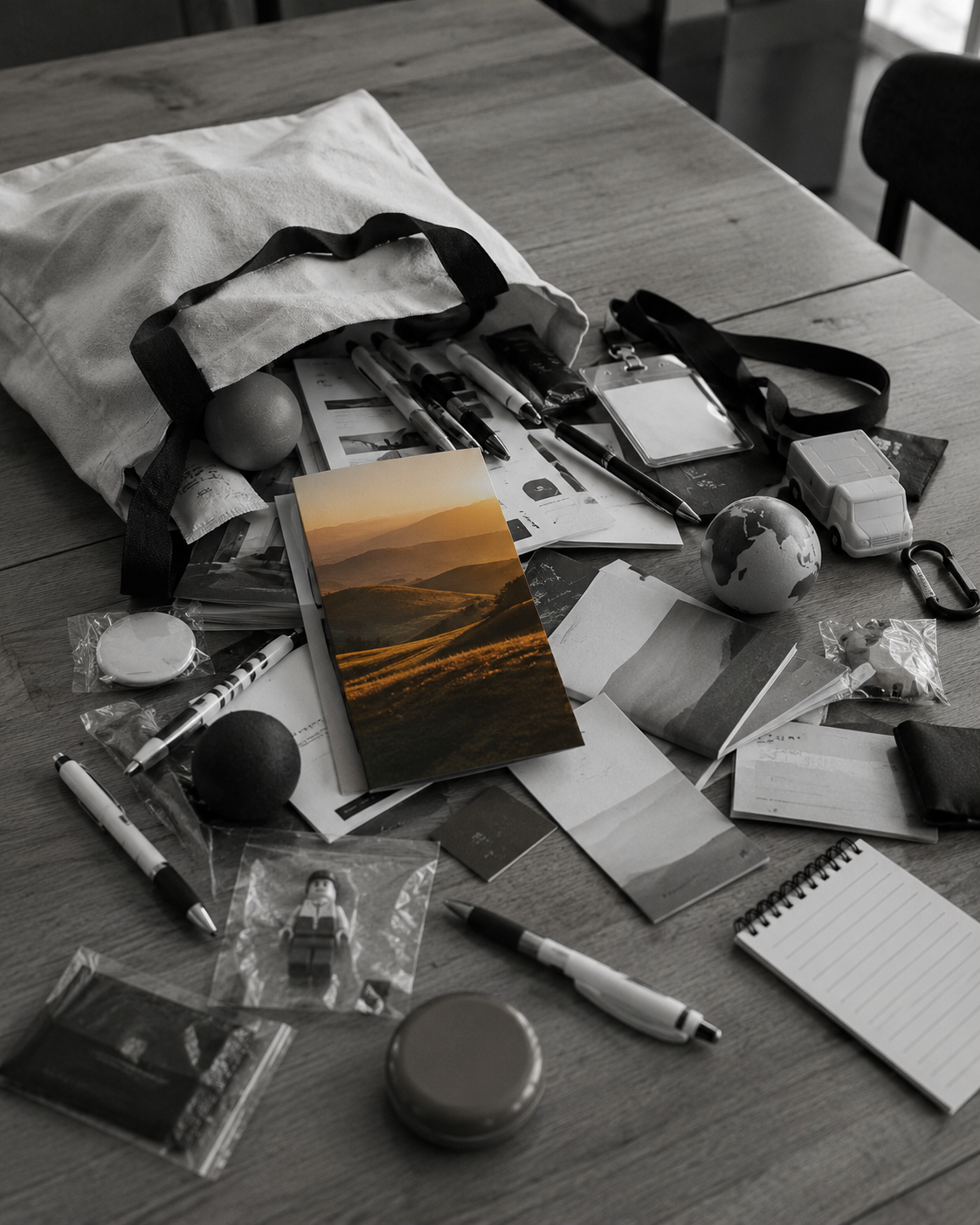
I used to come home from trade shows with one of those giant tote bags they hand you at registration.
You know the one.
By the end of the day it's filled with brochures, business cards, pens you'll never use, stress balls shaped like globes, and at least one piece of candy that's somehow melted itself to the bottom.
I'd dump the whole thing on the kitchen table and start sorting.
Keep.
Recycle.
Recycle.
Recycle.
Every now and then something would survive.
It wasn't always the flashiest brochure. It wasn't even necessarily the prettiest one.
It was usually the one that made me remember who the company was.
Funny how low we've set the bar.
One brochure stuck around for months because it was printed on really nice paper. I kept picking it up absentmindedly while I was working. Every time I did, I thought, These people seem like they have their act together.
Did I know anything else about the company?
Not really.
But that's the funny thing about branding. We're constantly making tiny assumptions from tiny details.
The paper.
The weight.
The photography.
The way something feels in your hand.
None of those things close a deal on their own.
But they all answer the same quiet question:
"Can I trust you?"
We spend a lot of time thinking about websites, and for good reason. A website is often where someone meets your business.
But brands don't stay on websites.
They show up in conference booths, coffee meetings, presentation folders, business cards, packaging, brochures, and all the little moments after someone closes the browser.
Those moments don't need to be flashy.
They just need to feel like they belong to the same company.
I've seen beautiful websites paired with business cards that looked like they were designed during a lunch break.
I've also seen modest websites backed by thoughtful, consistent print that made the entire business feel more established.
One experience builds on the other.
That's why I still love print — not because it's old-school — because it's tangible.
Someone can hold it, fold it, pin it to a bulletin board, or accidentally leave it on their passenger seat for three weeks.
A website can't do that.
One thing I've always believed is that printing shouldn't be where I make my money. If your brochures cost $186 to print, that's what you pay. No markup. I'd rather you spend your budget on better paper than on my invoice.
After all, my job isn't to sell paper.
It's to make sure every touchpoint tells the same story.